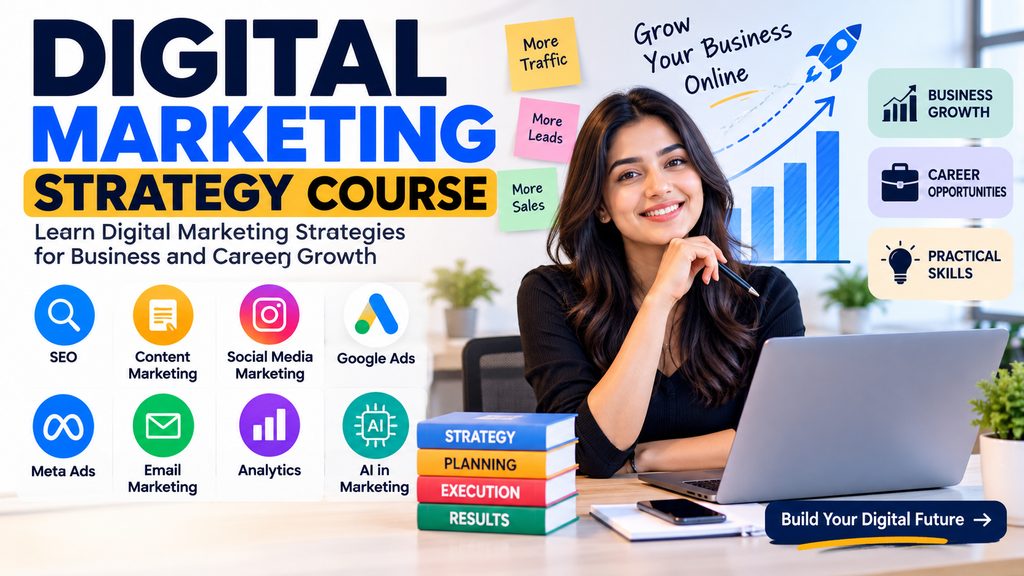
Digital Marketing Strategy Course has become an essential part of modern business. Whether you are a business owner, student, freelancer, working professional, or marketing enthusiast, learning how to create and implement an effective Digital Marketing Strategy Course can help you build a strong online presence and reach the right audience.
A Digital Marketing Strategy Course helps you understand how different digital marketing channels work together to achieve business goals. Instead of learning individual tools separately, you learn how to plan campaigns, identify your target audience, create valuable content, generate leads, measure results, and improve marketing performance.
In this guide, we will explain what a digital marketing strategy is, what you can learn in a Digital Marketing Strategy Course, the most important digital marketing channels, career opportunities, and how to choose the right course.
7 Ultimate Digital Marketing Strategy Course Tips for Career Growt
1. SEO Strategy सीखें
Keyword research, on-page SEO, technical SEO और link building को practical तरीके से समझें।
2. Google Ads पर Focus करें –
Search campaigns, keyword targeting, ad copy aur conversion tracking ki practice karein.
3. Social Media Marketing सीखें –
Instagram, Facebook aur LinkedIn par content strategy, audience targeting aur engagement ko samjhein.
4. Content Marketing में Strong बनें –
Blogs, social media posts, videos aur other content formats create karna seekhein.
5. Meta Ads की Practice करें –
Campaign setup, audience targeting, retargeting aur performance optimization par kaam karein.
6. Analytics & Data को समझें –
Google Analytics, Search Console aur advertising reports se campaign performance analyse karna seekhein.
7. AI & Automation का इस्तेमाल करें
AI tools का उपयोग content creation, research, SEO, advertising और marketing automation को faster और more effective बनाने के लिए करें।
What Is a Digital Marketing Strategy?
A Digital Marketing Strategy Course is a planned approach that uses online channels and digital technologies to achieve specific business and marketing goals.
Common digital marketing goals include:
- Increasing website traffic
- Generating qualified leads
- Increasing online sales
- Building brand awareness
- Growing social media presence
- Improving customer engagement
- Increasing conversions
- Retaining existing customers
An effective Digital Marketing Strategy Coursestarts by understanding the target audience and business objectives. Marketers then select the right channels, create relevant content, launch campaigns, track performance, and continuously optimize their strategy based on data.
Why Learn Digital Marketing Strategy?
Businesses are increasingly using digital platforms to connect with their customers. As more consumers spend time online, companies need professionals who understand how to attract, engage, and convert audiences through digital channels.
Learning Digital Marketing Strategy Course helps you understand not only which marketing tools to use, but also when and why to use them.
For example:
- SEO can improve organic search visibility.
- Google Ads can provide paid search visibility.
- Social media can increase engagement and brand awareness.
- Email marketing can support lead nurturing and customer retention.
A strategic approach brings these activities together around a common business objective.
5 Powerful Digital Marketing Strategy Course Tips for Success
SEO Details –
- Focus Keyword: Digital Marketing Strategy Course –
2. SEO Title: 5 Powerful Digital Marketing Strategy Course Tips for Success –
3. Slug: digital-marketing-strategy-course-tips-success –
4. Meta Description: Discover 5 powerful Digital Marketing Strategy Course tips to build practical skills, improve marketing results, and achieve career success. –
5. 5 Powerful Digital Marketing Strategy Course Tips for Success
What Do You Learn in a Digital Marketing Strategy Course?
A comprehensive Digital Marketing Strategy Course can cover several important areas of online marketing.
1. Market and Competitor Research
Before creating a marketing campaign, you need to understand your market and competitors.
A digital marketing strategy course may teach you how to:
- Identify your target audience
- Understand customer needs
- Research competitors
- Analyze market trends
- Identify customer pain points
- Create buyer personas
2. Search Engine Optimization (SEO)
SEO is an important part of a Digital Marketing Strategy Course. It focuses on improving a website’s visibility in search engine results.
A digital marketing course may teach:
- Keyword research
- On-page SEO
- Technical SEO
- Off-page SEO
- Content optimization
- Internal linking
- Search intent
- Website audits
- SEO analytics
For example, if a user searches for “digital marketing course,” businesses offering relevant courses can use SEO to improve their chances of appearing in search results.
3. Content Marketing Strategy
Content plays an important role in attracting, educating, and engaging potential customers.
Content marketing can include:
- Blog posts
- Social media posts
- Videos
- Infographics
- Guides
- Case studies
- Email newsletters
- Landing page content
An effective content strategy focuses on creating useful and relevant content for a clearly defined audience.
Instead of publishing content randomly, marketers can create a content calendar based on customer questions, search demand, business objectives, and different stages of the customer journey.
4. Social Media Marketing Strategy
Social media platforms give businesses opportunities to communicate directly with their target audience.
A social media strategy may include:
- Platform selection
- Content planning
- Audience research
- Engagement strategy
- Community building
- Performance tracking
- Social media advertising
Different platforms attract different types of audiences. Therefore, businesses should select social media platforms according to their target customers and marketing objectives.
5. Google Ads Strategy
Google Ads can help businesses reach users who are actively searching for a particular product or service.
A Google Ads Strategy may include:
- Keyword Research
- Campaign Structure
- Search Campaigns
- Display Campaigns
- Conversion Tracking
- Ad Copywriting
- Landing Page Optimization
- Campaign Performance Analysis
The objective of Google Ads should not be limited to generating clicks. A well-planned campaign strategy should focus on achieving meaningful business results such as Leads, Sales, or Qualified Enquiries.
6. Meta Ads Strategy
Meta Ads can help businesses reach specific audiences across platforms such as Facebook and Instagram.
A Meta Ads strategy can include:
- Audience targeting
- Campaign objectives
- Creative development
- Ad copy
- Lead generation
- Retargeting
- Conversion campaigns
- Performance analysis
Testing different creatives, audiences, and messages can help marketers understand what works best for their campaign objectives.
7. Email Marketing Strategy
Email marketing can be useful for communication, lead nurturing, and customer retention.
A digital marketing strategy course may cover:
- Email list building
- Campaign planning
- Email copywriting
- Automation
- Segmentation
- Personalization
- Performance tracking
For example, a business can use email automation to send educational content to new leads before presenting a relevant offer.
8. Website and Landing Page Strategy
Many digital marketing campaigns send users to a website or landing page. Therefore, marketers should understand the basics of website and landing page optimization.
Important elements include:
- Clear headlines
- Strong calls to action
- Mobile responsiveness
- Fast loading speed
- Simple navigation
- Relevant content
- Lead forms
- Trust signals
A good landing page should match the message used in the advertisement or search result that brought the visitor to the page.
The Role of AI in Digital Marketing Strategy
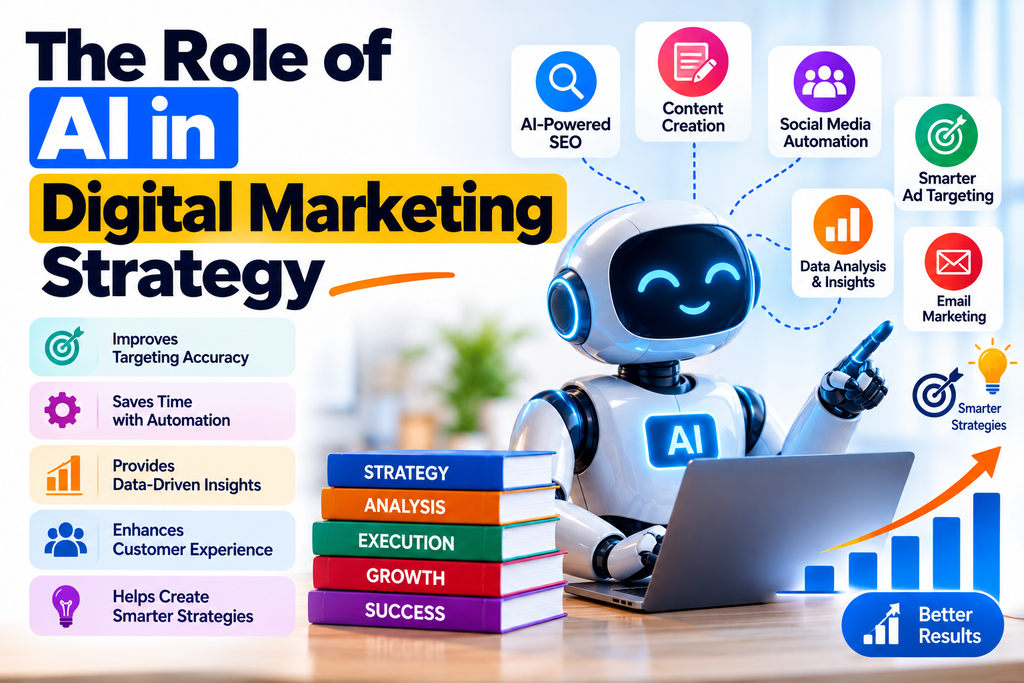
Artificial intelligence is changing how marketers research, create, analyze, and optimize campaigns.
AI tools can assist with:
- Content ideas
- Keyword research
- Ad copy variations
- Social media content
- Customer research
- Data analysis
- Workflow automation
- Personalization
- Image and video creation
However, AI should be used as a support tool rather than a replacement for marketing strategy. Human judgment remains important for understanding customers, brand positioning, business objectives, and campaign decisions.
A modern Digital Marketing Strategy Course can therefore benefit from including practical AI applications and automation.
How to Create a Digital Marketing Strategy
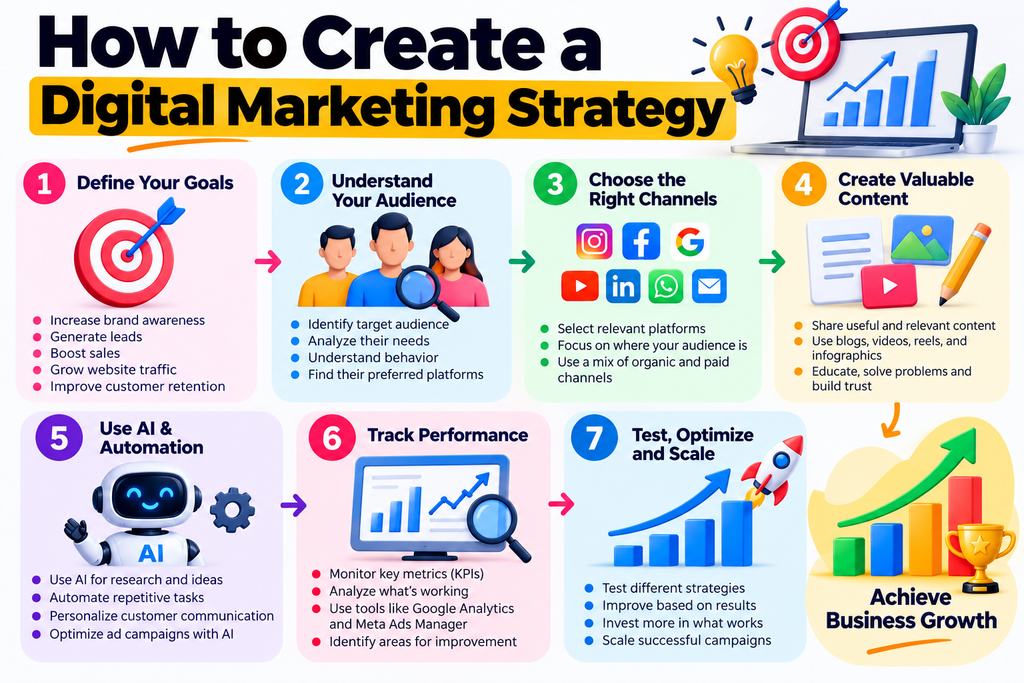
A basic digital marketing strategy can be developed through the following steps.
Step 1: Define Your Marketing Goal
Start with a clear and measurable objective.
For example:
- Generate 100 qualified leads
- Increase website traffic
- Improve online sales
- Build brand awareness
Whenever possible, your marketing goal should be measurable.
Step 2: Identify Your Target Audience
Understanding your customers is essential for creating an effective digital marketing strategy.
Consider:
- Age
- Location
- Interests
- Problems
- Buying behavior
- Search behavior
- Preferred platforms
A clear understanding of your audience helps you create more relevant content and campaigns.
Step 3: Conduct Keyword Research
Keyword research helps identify what potential customers are searching for online.
Tools such as Google Keyword Planner, Ahrefs, Semrush, and Google Trends can help marketers discover keyword opportunities and understand search demand.
Step 4: Select the Right Digital Marketing Channels
You do not necessarily need to use every digital marketing channel.
You do not necessarily need to use every digital marketing channel.
Choose channels based on your target audience and business objectives.
For example:
Search Traffic → SEO + Google Ads
Social Engagement → Social Media + Meta Ads
Lead Nurturing → Email Marketing
Brand Education → Content Marketing
Choosing the right channels can help you use your marketing resources more effectively.
Choosing the right channels can help you use your marketing resources more effectively.
Step 5: Create Valuable Content
Your content can include:
- Blog posts
- Videos
- Social media posts
- Guides
- Case studies
- Landing pages
High-quality content can help attract potential customers and support different stages of the customer journey.
Step 6: Launch Your Campaign
After planning your strategy, launch your SEO, content, social media, email, or advertising campaigns.
Before launching paid campaigns, make sure conversion tracking and other relevant analytics are properly configured.
Step 7: Measure Marketing Performance
Use analytics to understand what is working and where improvements are needed.
Important digital marketing metrics may include:
- Website traffic
- Leads
- Conversion rate
- Cost per lead
- Click-through rate
- Engagement
- Return on ad spend
- Revenue
Step 8: Optimize Your Strategy
Digital marketing is an ongoing process.
Analyze your results, identify weak areas, test different approaches, and optimize your campaigns based on data.
Continuous optimization can help improve campaign performance over time.
Who Should Take a Digital Marketing Strategy Course?
A Digital Marketing Strategy Course can be useful for different types of learners.
Students
Students can develop practical digital marketing skills and explore career opportunities in SEO, social media, paid advertising, content marketing, and analytics.
Business Owners
Business owners can learn how digital channels can be used to promote their products and services, generate leads, and build an online presence.
Working Professionals
Working professionals can add digital marketing skills to their existing expertise and explore new career opportunities.
Freelancers
Freelancers can learn services such as SEO, social media management, Google Ads, Meta Ads, content marketing, and email marketing to offer to clients.
Entrepreneurs
Entrepreneurs can use digital marketing knowledge to build, promote, and grow their own businesses.
Career Opportunities After Learning Digital Marketing
Digital marketing skills can be applied across many different roles.
Potential career paths include:
- Digital Marketing Executive
- SEO Specialist
- Social Media Manager
- PPC Specialist
- Google Ads Specialist
- Meta Ads Specialist
- Content Marketing Specialist
- Email Marketing Specialist
- Digital Marketing Strategist
- Performance Marketing Specialist
- Digital Marketing Consultant
- Digital Marketing Freelancer
Actual job roles, salaries, and career progression depend on factors such as skills, experience, location, organization, and professional performance.
How to Choose the Right Digital Marketing Strategy Course
Before enrolling in a course, consider the following factors.
Practical Training
Look for a course that includes practical assignments and real-world projects instead of focusing only on theory.
Practical experience can help you understand how digital marketing strategies are applied in real campaigns.
Updated Curriculum
Digital marketing changes frequently. Check whether the course covers current SEO practices, advertising platforms, analytics, automation, and AI tools.
Experienced Trainers
Consider the trainer’s practical experience and professional background before choosing a course.
Projects and Portfolio
Projects can help you demonstrate your digital marketing skills to potential employers and clients.
Analytics and Tracking
Make sure the course teaches measurement and reporting, not just content creation and advertising setup.
Understanding analytics can help you evaluate whether your marketing strategy is achieving its objectives.
AI and Automation
AI is becoming increasingly important in digital marketing workflows. Learning practical AI applications and automation can help marketers work more efficiently.
Digital Marketing Strategy vs. Digital Marketing Tactics
Strategy and tactics are closely related, but they are not the same.
Strategy defines what you want to achieve and how you plan to reach your objective.
Tactics are the specific actions used to execute the strategy.
For example:
Goal: Generate qualified leads.
Strategy: Use organic search and paid advertising to reach people actively searching for the service.
Tactics: Keyword targeting, SEO content, Google Ads, landing page optimization, conversion tracking, and remarketing.
Understanding the difference between strategy and tactics is important for becoming an effective digital marketer.
Conclusion
A strong digital marketing strategy brings different online marketing activities together around clear business objectives. Instead of focusing only on individual tools, marketers need to understand their audience, search behavior, content, advertising, analytics, conversion optimization, and customer journey.
A well-structured Digital Marketing Strategy Course can provide a systematic way to develop these skills through theory, practical assignments, projects, and real-world campaign planning.
If your goal is to build a career in digital marketing, start with the fundamentals, practice regularly, analyze real campaigns, and continue learning as digital platforms, tools, and technologies evolve.
Click On The Link For More Blog Updates
Frequently Asked Questions (FAQ’S)
What is a Digital Marketing Strategy Course?
A Digital Marketing Strategy Course teaches you how to plan, execute, measure, and optimize digital marketing campaigns using SEO, content marketing, social media, Google Ads, Meta Ads, email marketing, analytics, and AI tools.
Can beginners join a Digital Marketing Strategy Course?
You can learn skills such as SEO, content marketing, social media marketing, Google Ads, Meta Ads, email marketing, analytics, conversion optimization, AI tools, and digital marketing strategy.
Is SEO included in digital marketing strategy?
Yes. SEO is an important part of a digital marketing strategy. It helps businesses improve organic search visibility and attract relevant users through search engines.
Can I learn digital marketing for freelancing?
Yes. Digital marketing skills such as SEO, social media management, content creation, Google Ads, Meta Ads, and email marketing can be offered as freelance services to businesses and clients.
Why is AI important in digital marketing?
AI can help marketers with content ideas, keyword research, ad copy, customer research, data analysis, personalization, creative development, and workflow automation. However, human judgment is still important for making strategic marketing decisions.
What career opportunities are available after learning digital marketing?
After learning digital marketing, you can explore roles such as Digital Marketing Executive, SEO Specialist, Social Media Manager, PPC Specialist, Google Ads Specialist, Meta Ads Specialist, Content Marketing Specialist, Performance Marketing Specialist, Digital Marketing Strategist, Consultant, or Freelancer.